01
Align
A loose idea became a product thesis: weather as a visual, emotional, place-based experience that still behaves like a useful forecast.
Case study · Consumer product
Turning the daily forecast into a visual experience worth opening every day. Designed, built, and shipped by Kollective.
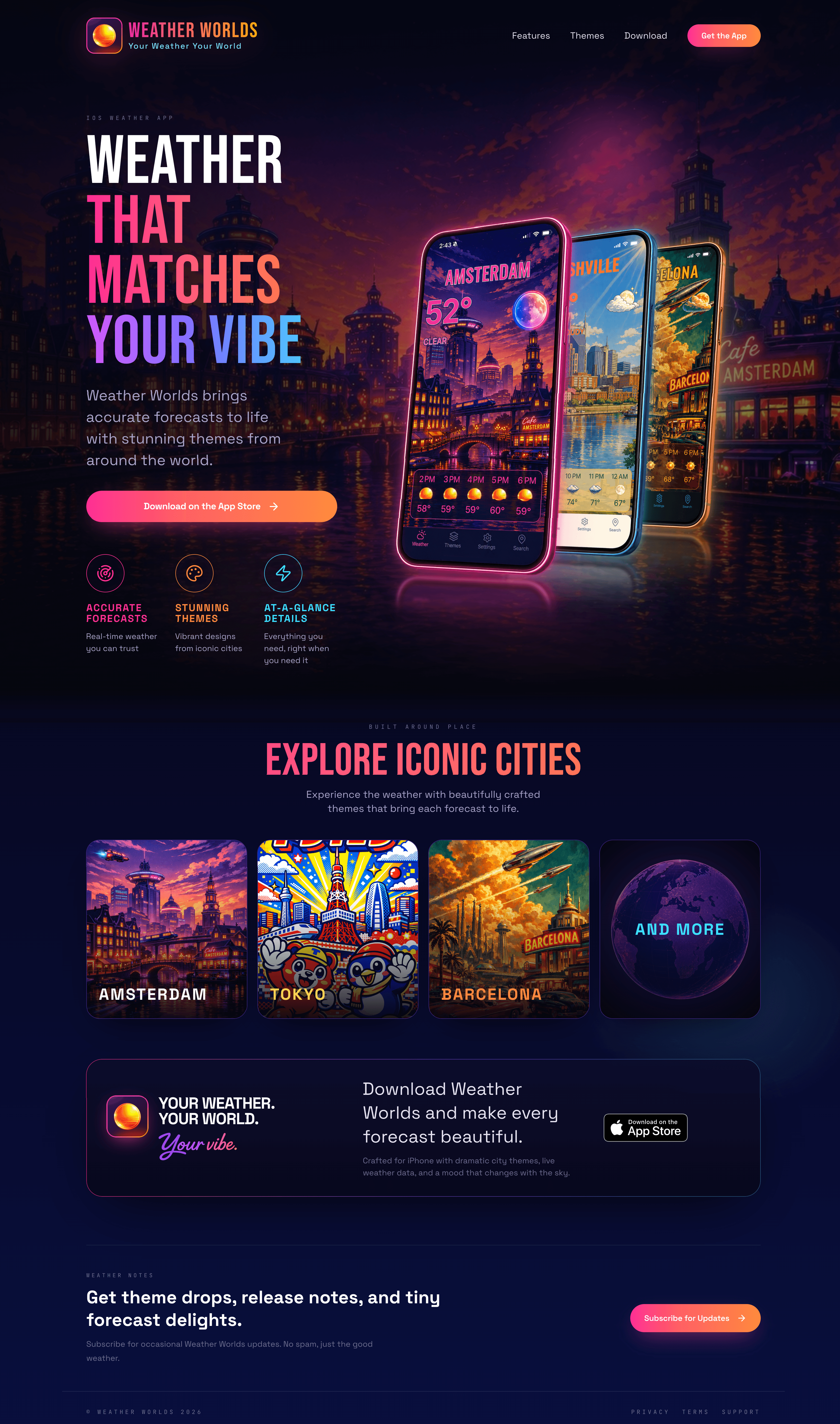
The question
What if checking the weather felt less like reading a utility screen and more like stepping into a world?
Most weather apps compete on the same promise: accuracy, speed, a clean forecast. Those things matter, and Weather Worlds keeps them. But the daily forecast is also emotional. It changes how you dress, move through a city, and feel about the day ahead.
Weather Worlds designs for that gap: weather as a visual, atmospheric, personal experience, without losing the clarity people open a weather app to get.
It is a weather app you open because you want to see something, not just check something.
The starting point
What if the weather matched your world?
That question could go anywhere, and that was the danger. Wallpaper app, mood toy, travel gimmick: all of them plausible, none of them a product. The work wasn't adding screens. It was deciding what this refused to be.
Without that framing, the project would have become a collection of beautiful weather images. The goal was a clear product idea underneath the visual world.
The workflow
The same loop Kollective runs on client work. AI widened the field at every stage. Product judgment decided what became real.
A loose idea became a product thesis: weather as a visual, emotional, place-based experience that still behaves like a useful forecast.
AI generated world-building routes, city themes, color systems, and interface moods at volume, comparing more possibilities, earlier.
The project became a product instead of a gallery. AI supplied the material; the work was editing it down to one direction.
The direction became a buildable, shipped product: screens, themes, a real backend, monetization, and a launch site.
AI widened the exploration. Product judgment shaped what became real.
The product
The chosen direction is a weather app built around themed city worlds. The forecast stays practical — temperature, conditions, hourly detail, all glanceable. The difference is the layer around the data.
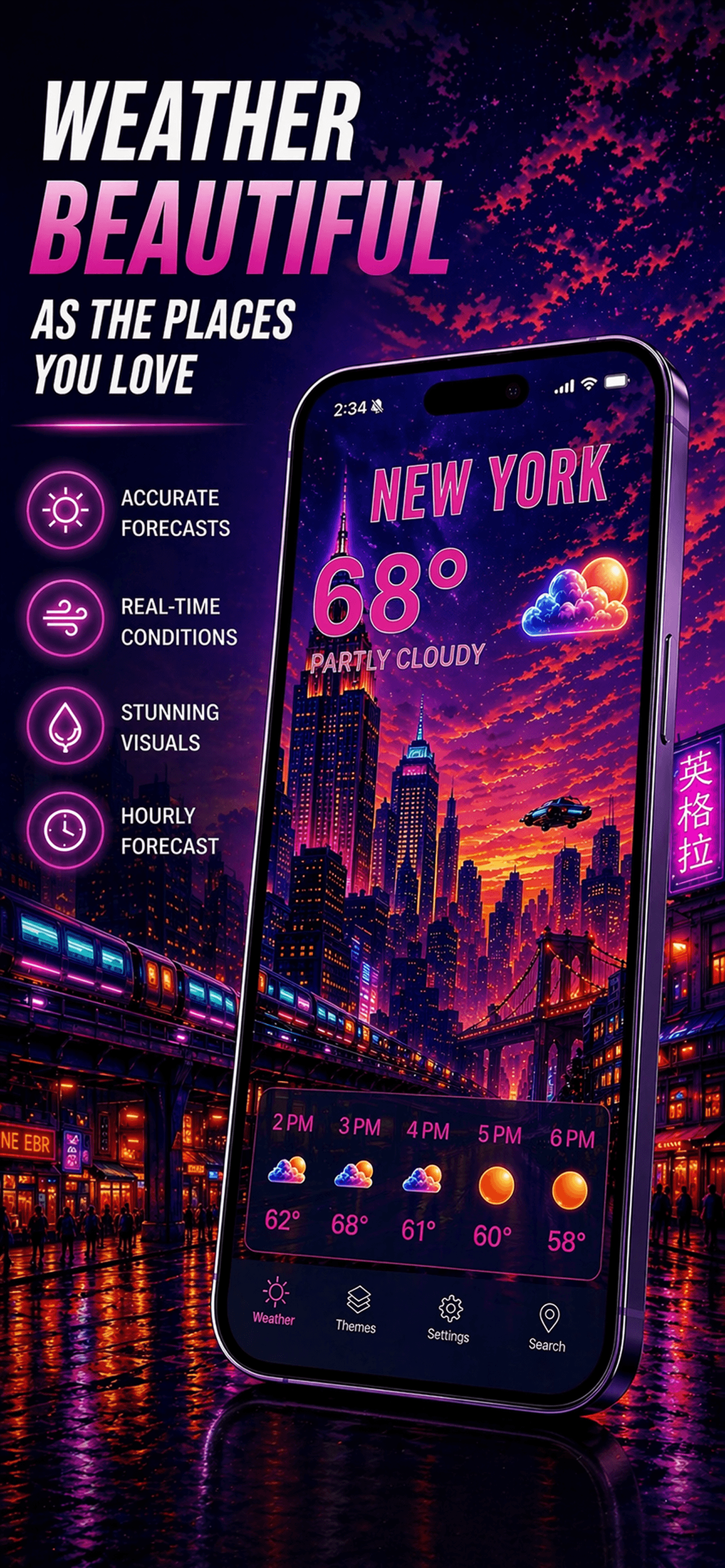
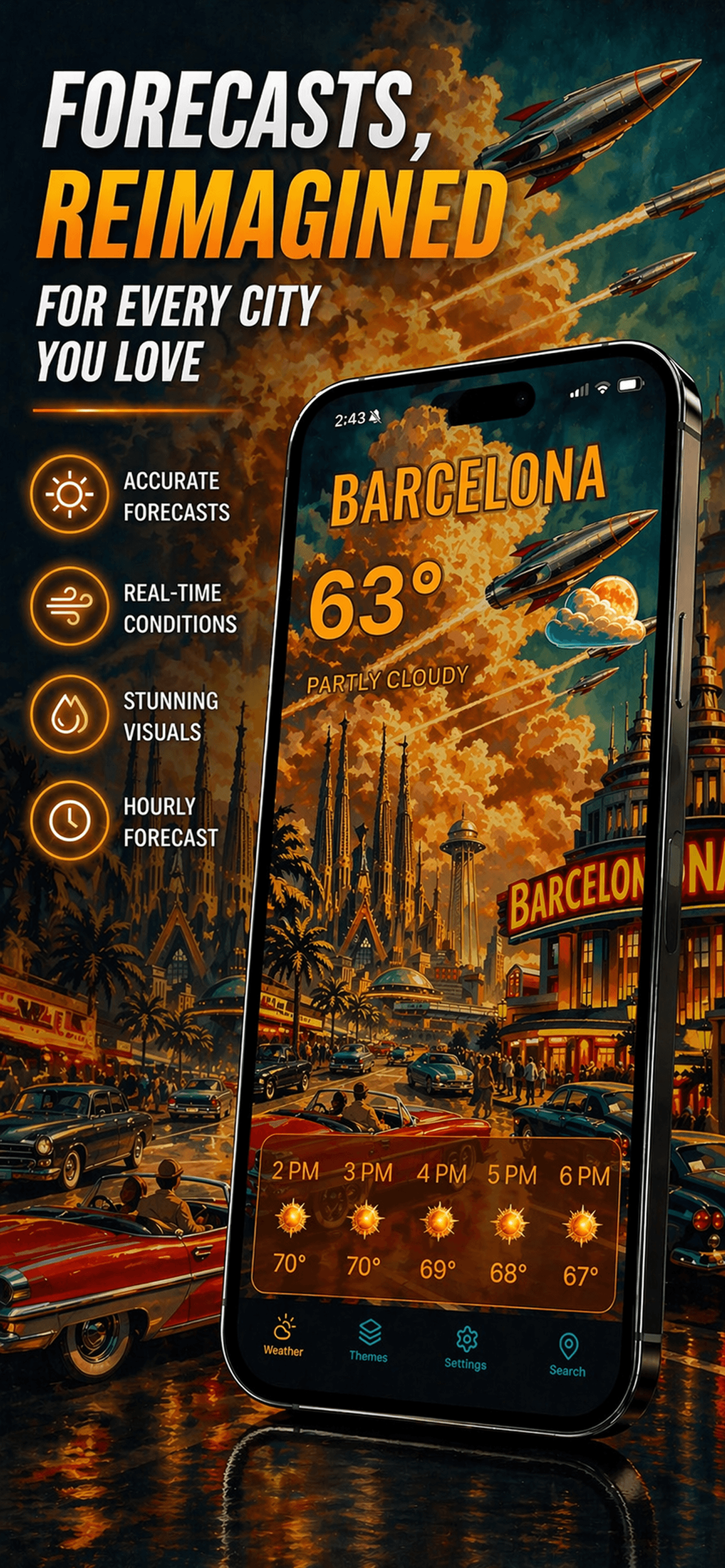
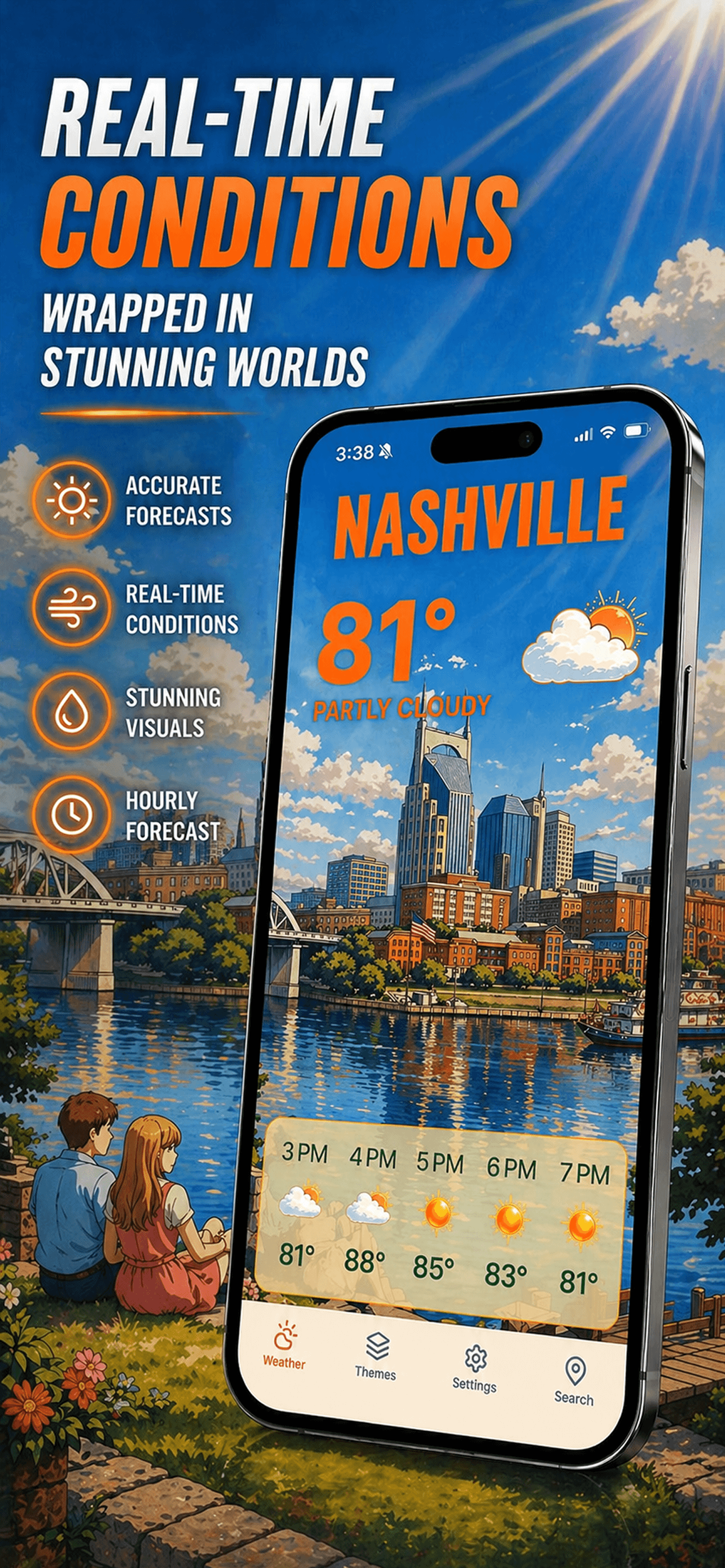
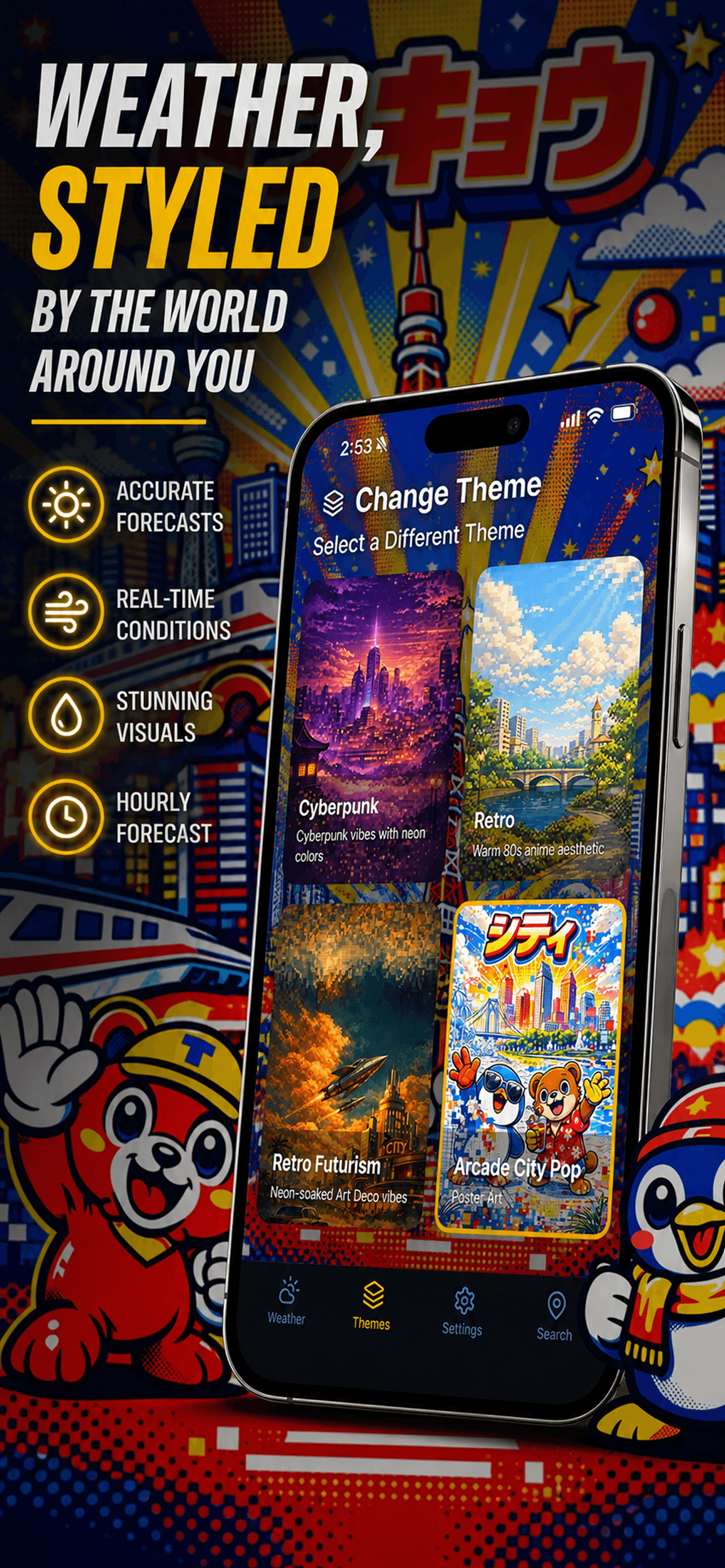
Each forecast sits inside a visual world with its own color, atmosphere, and mood. The condition icons get redrawn to fit each world, so a city rendered as a 1930s cartoon looks like nothing else on your phone. The interface could be bold precisely because the hierarchy stayed simple — expressive but not confusing, immersive but not slow.
The hard problem
Generate fresh imagery for every user, city, and theme, and costs scale linearly with usage and never stop climbing.
The architecture that makes Weather Worlds viable is its cost model. Every city x theme combination is generated once and cached globally, then served to every user who requests it.
This single decision — treat generation as a one-time shared asset rather than a per-request expense — is what turns an interesting demo into a shippable business.
Cost per city x theme
How it is built
Shipped, not staged
A finished product in users' hands, not a concept reel.
The front door
Weatherworlds.app is the brand's landing page: clean, atmospheric, built to lead with the promise, the phone experience, the iconic city themes, and a fast path to download.
The build reflects the same AI-native discipline as the product. The design system was authored in Claude Code as the single source of truth; the site itself was built with Codex against that system. Define the system once, build against it cleanly.
Where it is going
The roadmap extends the core idea in three directions, each one the same cache-once philosophy applied to a new layer.
Subtle, looping ambient motion layered onto the city stills: drifting clouds, neon flicker, shifting light.
Validated / rolling outA finite matrix of theme x weather-state tracks, generated once and served with smooth crossfades as conditions change.
Cache-once, for soundDaily auto-generated forecast clips that live in the app and double as social content, so output becomes top-of-funnel.
On the roadmapWhy it matters
It shows how Kollective takes an ambiguous idea and moves it through a faster, more exploratory loop without letting the work collapse into generic AI output, and lands on something real enough to ship. AI created more material at every step; product judgment turned it into a product.
The outcome will not always look like Weather Worlds. It should not. The workflow is the constant: align the idea, explore the possibilities, decide what matters, and make the direction real enough to build from. This is the bar Kollective sets for its own work, and the same bar it brings to yours.
You already have the idea
An unclear product idea, an AI-enabled workflow, a fuzzy redesign. Leave with something your team can see, critique, and carry forward.